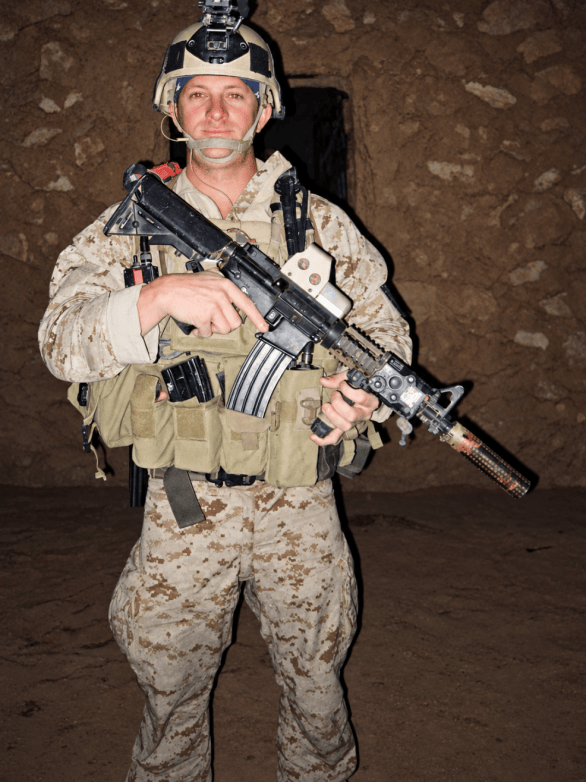
The Hidden Grief of Identity Loss After Military Service
Some battles begin after military service ends. They are fought quietly—at home, at work, in relationships, and in the uncomfortable space between who a person was and who they are becoming.
For many veterans, leaving the military means more than changing careers. It can mean losing the mission, brotherhood, structure, and sense of significance that once organized everyday life. Military service can become more than something you do. It becomes part of who you believe you are.
The uniform comes off. The mission changes. But the need to belong, contribute, and matter does not.
What Has Really Been Lost?
Military life can provide seven deeply interconnected foundations. Each helps explain why leaving service may feel like losing more than a career:
1. Identity: I knew who I was.
2. Purpose: I knew what I was there to accomplish.
3. Belonging: I knew who my people were.
4. Structure: I knew what was expected of me.
5. Competence: I knew what I was capable of.
6. Significance: I knew my contribution mattered.
7. Culture: I shared a language, values, and way of life with those around me.
When several of these foundations change at once, a veteran can have a good career, a loving family, and outward stability yet still feel disconnected, restless, or empty. The loss can unsettle not only daily routine, but also a person’s sense of worth and place in the world.
The Grief No One Sees
Grief is not limited to death. We can grieve a former identity, relationships, a way of life, or a future we expected. A veteran can be relieved to leave the hardships of military service and still ache for the camaraderie, responsibility, and belonging it provided. Both feelings can be true.
Identity loss can be difficult to recognize because psychological suffering does not always resemble a mental health disorder. A veteran might be employed, physically fit, financially stable, and functioning well outwardly while experiencing significant distress internally. Some of the ways this pain may appear include:
| Psychological experience | How it may appear |
| Grief | Mourning a former way of life, relationships, and a sense of self |
| Emptiness | Feeling that life has lost its significance despite having responsibilities |
| Shame | Interpreting the difficulty of transition as personal weakness or failure |
| Anger | Frustration with civilian systems, relationships, or perceived loss of status |
| Alienation | Feeling misunderstood or disconnected from people who have not served |
| Anxiety | Uncertainty over one’s future, security, direction, or capacity to adapt |
| Loss of confidence | Questioning one’s abilities despite previous achievements |
| Hopelessness | Believing that the most meaningful part of life has already happened |
The question beneath the pain is often simple: “If I am no longer who I was, who am I now?”
Why Moving Forward Can Feel Like Betrayal
For some veterans, there is another layer of grief: the fear that creating a fulfilling new life means abandoning the old one. If I find purpose somewhere else, am I leaving my brothers and sisters behind? If I become someone different, do the years of sacrifice, pride, and service somehow matter less?
This tension can leave someone caught between honoring the past and participating fully in the present. The familiar military identity remains a source of pride, but it may also become the standard against which everything else is measured. When civilian experiences fail that comparison, the future may appear smaller—not because it lacks potential, but because its meaning has not yet been built.
Moving forward is not betrayal. Growth does not erase loyalty. A new chapter does not diminish the one that came before.
Why the Transition Is Psychological—not Just Practical
In Transitions, William Bridges explains that external change and internal transition are different. Leaving military service happens on a date; adapting to the loss of familiar roles can take much longer. Between an ending and a new beginning is an uncertain period in which the old identity no longer fits as it once did and a new direction is still developing.
In Tribe, Sebastian Junger explores the need for shared purpose and belonging. Veterans may miss more than their teammates. They may miss the experience of being trusted, relied upon, and part of something larger than themselves.
In Life Is in the Transitions, Bruce Feiler describes how major disruptions can require people to rewrite the stories they tell about themselves. The task is not to erase earlier chapters, but to make room for the next one.
Together, these perspectives suggest a practical direction: acknowledge the loss, preserve what matters, reconnect with others, and begin developing a life that makes space for both the past and the future.
The Difference Between Your Role and Your Worth
Your rank, position, unit, or specialty described what you did. They never contained all that you are. Courage, discipline, integrity, loyalty, service, leadership, and compassion can remain long after the role that shaped them has ended.
Someone who once led a team can still mentor a young person. A protector can care for family or community. Someone committed to mission accomplishment can devote that same discipline to health, learning, relationships, or service. The answer is not always another demanding career or another achievement that must prove your value.
Instead of asking, “How do I get my old life back?” ask, “Which values made that life meaningful—and how can I live them today?”
That shift does not minimize the loss. It gives grief a place in the story without allowing it to write the entire future.
Rebuilding Identity and Purpose
Healing begins by acknowledging what has been lost while recognizing what remains. The discipline, courage, resilience, leadership, and commitment developed during military service do not disappear when someone separates. The next step is learning how to apply those qualities differently.
Rebuilding involves meaningful relationships, achievable goals, new responsibilities, and a renewed sense of purpose. Fortitude organizes that work into six connected phases:
Phase 1 — Recognize. Identify the elements of identity, purpose, or belonging that have changed. Understand that identity disruption can coexist with depression, PTSD, and other conditions without being the same thing.
Phase 2 — Acknowledge and grieve. Make room for sadness, anger, nostalgia, disappointment, and uncertainty without treating the experience as weakness or requiring the telling of traumatic stories.
Phase 3 — Reclaim. Identify strengths, values, and personal qualities that existed before service or developed during service and remain relevant today.
Phase 4 — Reconnect. Strengthen existing relationships and establish new communities that offer mutual trust, contribution, and belonging.
Phase 5 — Reconstruct. Develop new roles, goals, meaningful responsibilities, and sources of purpose through values-based action and experimentation.
Phase 6 — Reinforce. Establish daily habits, ongoing support, accountability, and reflection so the new identity can continue evolving beyond a retreat or single turning point.
Five Ways to Start Rebuilding
Identity reconstruction is not one revelation. It happens through honest reflection, meaningful connection, and repeated action. These exercises provide a practical starting point:
1. Separate your role from your values. Write five words that described your military identity—leader, protector, teammate, disciplined, capable. Beneath each, identify the value it represents. Then choose one way to practice that value this week.
2. Name what you miss. List what service provided that you no longer experience regularly: brotherhood, mission, structure, expertise, or significance. Acknowledge what cannot be recreated, and identify what might be rebuilt in another form.
3. Write your three identities. Use the reflection below to describe who you were, who you are today, and who you are becoming. Look for strengths and values that connect all three.
4. Reconnect on purpose. Contact someone who knows you well. Join a group, community, or activity where you can contribute and be known. New relationships do not replace military brotherhood; they expand the places you can belong.
5. Set a 30-day mission. Choose one meaningful goal in health, family, learning, relationships, or community. Define why it matters, one small weekly action, and someone who will hold you accountable. Measure what you are building—not only what you accomplish.
The Three Identities
Consider these three descriptions in writing. You do not need to have every answer figured out today.
Identity 1 — Who I was Describe the roles, responsibilities, relationships, and experiences that defined your identity during military service.
Identity 2 — Who I am today Identify what has changed, what you miss, what remains meaningful, and what you find difficult to accept.
Identity 3 — Who I am becoming Describe the qualities, relationships, responsibilities, and commitments you want to develop beyond your military role.
Your Story Is Not Over
Rebuilding identity takes time. It involves acknowledging pain, challenging the belief that your worth is tied to a former title, strengthening relationships, and practicing new ways to contribute. For some veterans, identity disruption intersects with depression, trauma, or other concerns that deserve professional support. There is no deadline for moving forward.
At Fortitude Foundation, our purpose is to help veterans move forward through mental health education, honest reflection, meaningful connection, practical tools, and sustained accountability. The goal is not to erase military identity. It is to help build a fulfilling life in which that identity is honored without becoming the only source of worth.
Your service mattered. The person you were matters. And the person you are becoming matters just as much.
You do not have to choose between honoring who you were and becoming who you want to be. You are more than your rank. More than your title. More than the uniform you wore.
Your purpose did not end when your service did. There is still more to your story.
Written by: Travis Fishburn, Founder, The Fortitude Foundation
Forged in the Storm.
References & Further Reading
Bridges, W., & Bridges, S. (2019). Transitions: Making sense of life’s changes (40th anniversary ed.). Balance.
Feiler, B. (2020). Life is in the transitions: Mastering change at any age. Penguin Press.
Junger, S. (2016). Tribe: On homecoming and belonging. Twelve.

